

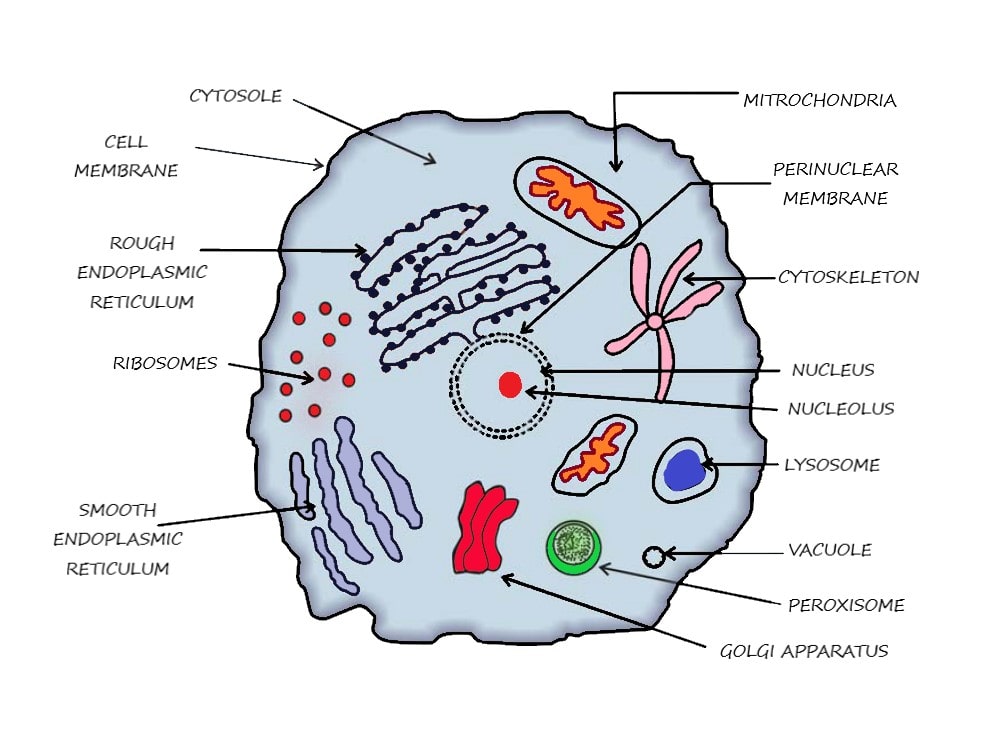
Did you know that the human body contains approximately 37 trillion cells, each performing specialized tasks to maintain life? Understanding Cell – Structure and Functions | Updated is fundamental to grasping how biological systems operate at a microscopic level. From the intricate dance of protein synthesis to the energy production within mitochondria, every component plays a critical role. As we move through 2026, advancements in microscopy and genetic sequencing continue to refine our knowledge of cellular biology. This guide explores the essential architecture and operational mechanics of the cell, offering a comprehensive look at life’s basic unit.
Fundamental Components of Cell Structure
The cell is often described as the building block of life, but its internal architecture is far more complex than a simple brick. The primary components include the cell membrane, cytoplasm, and genetic material. Each section serves a distinct purpose in maintaining homeostasis and facilitating growth. When studying Cell – Structure and Functions | Updated, it is vital to recognize how these parts interact dynamically rather than statically.
The Cell Membrane and Boundary Control
The cell membrane acts as a selective barrier, regulating what enters and exits the cell. Composed of a phospholipid bilayer with embedded proteins, it maintains the internal environment. This structure is crucial for transactions essential for the survival of the cellular entity. Without this boundary, the cell could not maintain the concentration gradients required for metabolic processes.
Recent studies in 2026 have highlighted the role of membrane fluidity in drug delivery systems. Researchers are now designing nanoparticles that can mimic membrane properties to bypass cellular defenses. This innovation relies heavily on understanding the lipid composition and protein channels found in the phospholipid bilayer. The membrane is not just a wall; it is a dynamic interface.
The Nucleus and Genetic Command Center
Enclosed by a double membrane called the nuclear envelope, the nucleus houses the cell’s DNA. It acts as the control center, directing cell division and protein synthesis. The complexity of genetic storage here rivals advanced data processing systems, similar to the logic found in advanced data processing systems used in modern technology. Every instruction for the cell’s operations originates from this central hub.
Within the nucleus, chromatin condenses into chromosomes during cell division. This ensures accurate replication of genetic information. In 2026, CRISPR technology has further evolved, allowing for more precise editing of this genetic code. This capability has profound implications for treating genetic disorders by correcting errors at the source.
Key Organelles and Their Specific Roles
Organelles are specialized structures within the cell, each performing a specific function. They work together like organs in a larger body. Understanding Cell – Structure and Functions | Updated requires a deep dive into these microscopic machines. Their efficiency determines the health and longevity of the organism.
Mitochondria: The Powerhouse Explained
Mitochondria generate adenosine triphosphate (ATP) through cellular respiration. This energy currency powers almost all cellular activities. They possess their own DNA, suggesting an evolutionary origin from ancient bacteria. The efficiency of mitochondria often dictates the metabolic rate of the cell.
Defects in mitochondrial function are linked to various diseases, including neurodegenerative disorders. Current research in 2026 focuses on enhancing mitochondrial biogenesis to combat aging. Therapies are being developed to boost ATP production in failing tissues. This organelle remains a primary target for longevity research.
Ribosomes and Protein Synthesis
Ribosomes are the sites of protein synthesis, translating mRNA into polypeptide chains. They can be found free in the cytoplasm or attached to the rough endoplasmic reticulum. Proteins produced here are essential for structure, function, and regulation of the body’s tissues and organs.
The process is highly regulated to ensure accuracy. Errors in translation can lead to misfolded proteins, which cause diseases like Alzheimer’s. Scientists are investigating how to optimize ribosomal function to improve protein quality. This area of study is critical for pharmaceutical development.
Prokaryotic vs Eukaryotic Cell Differences
Cells are broadly categorized into prokaryotic and eukaryotic types based on their structural complexity. Prokaryotes, like bacteria, lack a nucleus and membrane-bound organelles. Eukaryotes, including plants and animals, possess these advanced structures. This distinction is fundamental to Cell – Structure and Functions | Updated.
| Feature | Prokaryotic Cell | Eukaryotic Cell |
|---|---|---|
| Nucleus | Absent | Present |
| Size | 0.1-5.0 µm | 10-100 µm |
| Organelles | None | Membrane-bound |
| DNA Form | Circular | Linear |
The table above highlights the structural disparities between the two types. Eukaryotic cells are generally larger and more complex. This complexity allows for multicellular life forms with specialized tissues. Prokaryotes, despite their simplicity, are highly adaptable and ubiquitous.
Cellular Communication and Signaling
Cells do not operate in isolation; they communicate constantly to coordinate activities. This signaling involves chemical messengers binding to receptors on the cell surface. The complexity of these pathways is comparable to complex signaling networks found in telecommunications infrastructure.
Signaling pathways regulate growth, metabolism, and immune responses. Dysregulation can lead to cancer or autoimmune diseases. In 2026, researchers are mapping these pathways to identify new drug targets. Understanding how signals are transmitted is key to manipulating cell behavior therapeutically.
Intercellular junctions also play a role in communication. Gap junctions allow ions and small molecules to pass directly between cells. This direct connection ensures rapid synchronization in tissues like the heart. Without these junctions, coordinated contraction would be impossible.
Modern Research and 2026 Breakthroughs
The field of cell biology is advancing rapidly with new technologies. Super-resolution microscopy now allows scientists to visualize structures below the diffraction limit. This has revealed details about organelle interactions previously unknown. Such advancements are reshaping our understanding of Cell – Structure and Functions | Updated.
Organoids are another major breakthrough. These mini-organs grown from stem cells mimic the structure and function of real organs. They are used for drug testing and disease modeling. In 2026, organoid technology has reduced the need for animal testing significantly.
“The ability to model human tissue in vitro has transformed our approach to pharmacology. We can now predict toxicity and efficacy with unprecedented accuracy.” — Dr. Elena Ross, Lead Researcher at National Institutes of Health
Artificial intelligence is also being integrated into cell analysis. Algorithms can identify cellular patterns faster than human researchers. This speeds up the discovery of new biomarkers. The synergy between biology and data science is defining the current era of research.
Common Misconceptions About Cell Functions
Despite their importance, several myths persist regarding cellular biology. One common belief is that all cells are identical in function. In reality, cells differentiate to perform specialized roles. A neuron functions very differently from a muscle cell. This specialization is crucial for organism survival.
Another misconception is that cells are static entities. They are dynamic, constantly changing shape and composition. The cytoskeleton provides structural support but also enables movement. Cells can migrate, divide, and even self-destruct via apoptosis when necessary.
Some believe that the nucleus is the only site of genetic material. However, mitochondria and chloroplasts also contain DNA. This supports the endosymbiotic theory of evolution. Recognizing these nuances is important for a complete understanding of Cell – Structure and Functions | Updated.
Practical Applications in Medicine and Industry
Knowledge of cell structure drives innovation in medicine. Stem cell therapy is a prime example. By manipulating stem cells, doctors can repair damaged tissues. This holds promise for treating spinal cord injuries and diabetes. The field is expanding rapidly with clinical trials ongoing in 2026.
Industrial applications include fermentation for food and fuel production. Yeast cells are used to produce ethanol and bread. Genetic engineering enhances these processes for higher efficiency. Biofuels derived from algae cells are becoming more viable as green energy sources.
Furthermore, cancer treatment relies on understanding cell division. Chemotherapy targets rapidly dividing cells. New therapies aim to be more specific, sparing healthy tissue. Immunotherapy trains the immune system to recognize and destroy cancer cells. These advancements save countless lives annually.
Conclusion and Key Takeaways
The study of Cell – Structure and Functions | Updated reveals the incredible complexity of life at its smallest scale. From the protective membrane to the energy-generating mitochondria, every part serves a purpose. As we advance into 2026, technology continues to unlock new secrets of cellular behavior.
Understanding these mechanisms is not just academic; it is vital for medical progress. It enables the development of targeted therapies and regenerative medicine. Whether you are a student or a professional, grasping these concepts is essential. The cell remains the ultimate unit of biological organization and study.
For those interested in further learning, explore resources from Nature Scientific Reports for the latest findings. The journey into the microscopic world is endless and full of discovery. Continue to explore how these tiny units shape our existence and future health.


