

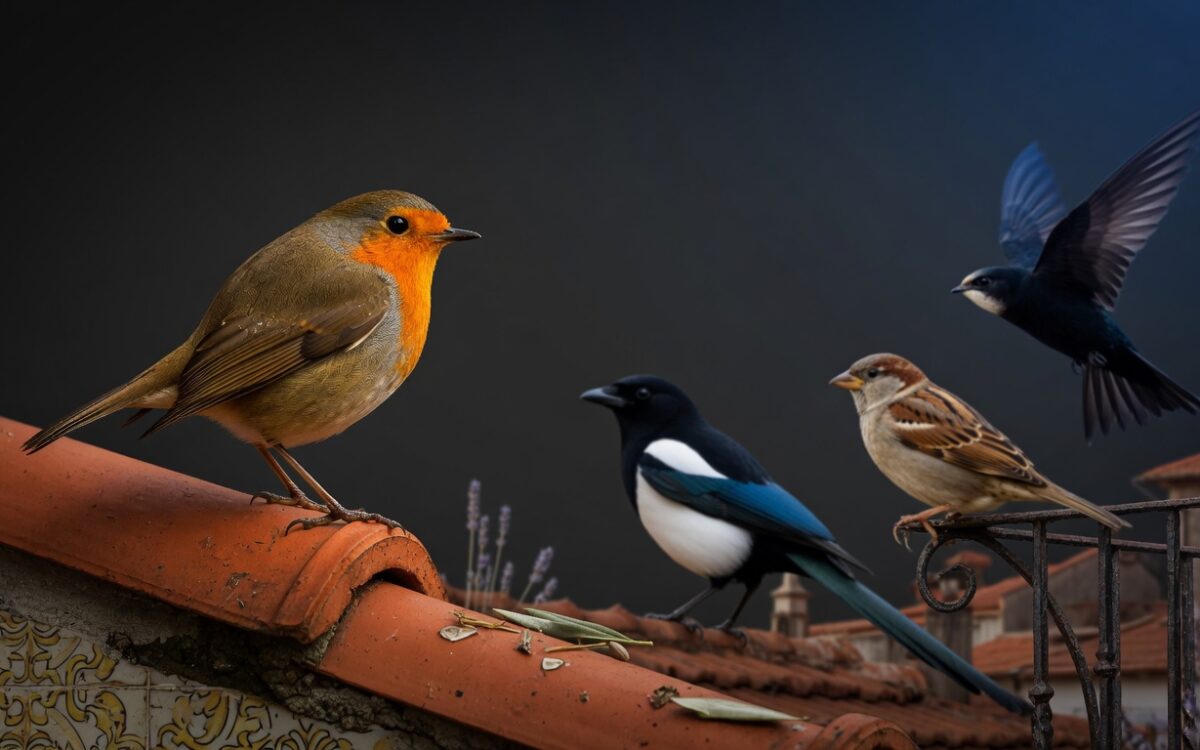
Spain hosts more than 600 bird species across its diverse landscapes, yet just a handful dominate gardens, parks, and farmland from the Pyrenees to the Canary Islands. Birdwatchers and casual observers alike quickly notice the same familiar shapes and songs, making these species the true face of Spanish avifauna.
Why Certain Birds Dominate Spain’s Skies
Abundant food sources, year-round mild climate, and extensive urban greenery allow a small group of species to thrive while others remain scarce. Cities and agricultural zones provide reliable nesting sites and constant water, tipping the balance heavily toward adaptable residents.
The European Union’s Common Bird Monitoring Scheme records show that the top ten species account for over 70 percent of all individual birds counted in Spain each spring. This concentration reflects both ecological success and human-shaped habitats that favor generalists over specialists.
Role of Agriculture and Urban Expansion
Olive groves, vineyards, and cereal fields create ideal foraging grounds for seed-eating and insect-eating species. Meanwhile, expanding suburbs replace dense scrub with lawns and scattered trees, conditions perfect for hole-nesters and ground-foragers alike.
Researchers at the University of Madrid documented a 35 percent rise in urban bird density between 2015 and 2025, driven largely by the same handful of species that now nest in building eaves and street trees.
Top Five Most Common Birds in Spain
These five species appear on virtually every bird list compiled by Spanish ornithologists and appear daily in city parks, rural villages, and coastal promenades.
House Sparrow
Still the single most numerous bird despite documented declines elsewhere in Europe, the house sparrow remains abundant in every Spanish province. Spanish SEO monitoring programs estimate roughly 8.4 million breeding pairs nationwide.
Its success stems from an omnivorous diet and the ability to nest in roof tiles, signage, and dense hedgerows. Observers often see flocks of 50 or more birds gleaning crumbs from café terraces and market squares.
Eurasian Collared Dove
Once limited to southeastern Europe, this dove has colonized Spain since the 1970s and now breeds in every autonomous community. Its soft, repetitive cooing fills suburban gardens from March through October.
Spanish ringing data indicate a population exceeding 1.2 million pairs, with the species thriving on spilled grain, sunflower seeds, and garden bird feeders.
European Goldfinch
Recognized by its red face and yellow wing bars, the goldfinch ranks among the most colorful common birds in Spain. It favors weedy verges and orchards where thistle and teasel seeds abound.
Regional surveys conducted by SEO/BirdLife place the Spanish breeding population above 2.1 million pairs, with numbers holding steady due to widespread planting of native wildflowers in public parks.
Common Blackbird
The glossy black male and brown-streaked female blackbird sing from rooftops at dawn and dusk across the country. Their diet of earthworms, berries, and kitchen scraps supports year-round residency even in high-altitude villages.
Long-term monitoring shows stable populations of approximately 3.8 million pairs, with urban densities often double those recorded in remote mountain forests.
Great Tit
With its striking black head stripe and yellow breast, the great tit readily uses nest boxes and garden feeders. It ranks as the most common tit species in Spain, especially in mixed woodland edges and city parks.
Spanish nest-box schemes report occupancy rates above 65 percent, confirming the species’ strong adaptation to human-modified landscapes.
Regional Variations Across Spain
While the five species above occur everywhere, certain regions host additional frequent sightings that locals quickly recognize.
Mediterranean Coast and Islands
Sardinian warblers and spotless starlings appear daily along the Costa Brava and in the Balearics. Their bold behavior around beachfront restaurants makes them familiar to tourists as well as residents.
Seabird colonies on the Canary Islands add Cory’s shearwaters and Atlantic canaries to the everyday list for island birders.
Northern Mountains and Atlantic Coast
In Galicia and the Basque Country, chaffinches and European robins dominate garden counts during winter. Snowfall at higher elevations drives these birds into lower valleys where supplementary feeding boosts survival rates.
Long-term data from the Spanish Atlas of Breeding Birds show chaffinch densities peak above 120 pairs per square kilometer in Atlantic oak woodlands.
Seasonal Patterns and Migration
Many common birds in Spain remain resident year-round, yet numbers swell dramatically each spring and autumn as migrants pass through.
Spring Arrivals
Swallows and house martins return in March, boosting aerial insect control around farms and villages. Their mud nests under eaves become a familiar sight to homeowners who welcome the free pest control.
Winter Influx
Northern European robins and chiffchaffs arrive in October, sharing gardens with resident blackbirds. Garden feeder surveys organized by SEO/BirdLife record a 40 percent increase in total bird numbers between November and February.
Supporting Common Birds in Your Area
Simple actions help maintain healthy populations of the most common birds in Spain while providing daily enjoyment for observers.
- Install nest boxes with 28 mm entrance holes for great tits and 32 mm holes for house sparrows.
- Plant native seed-bearing flowers such as teasel, lavender, and wild mustard to feed goldfinches.
- Provide shallow water sources cleaned weekly to prevent disease transmission.
- Reduce pesticide use in gardens to preserve insect prey for blackbirds and sparrows.
Many municipalities now distribute free nest boxes through local environmental offices, an initiative that has increased breeding success for cavity-nesters by up to 25 percent in participating neighborhoods.
Conservation Outlook and Emerging Trends
Although adaptable, even widespread species face pressures from habitat loss, climate shifts, and disease. Continuous monitoring remains essential.
SEO/BirdLife’s 2026 State of Birds report projects stable numbers for the top five species provided urban green corridors and pesticide reduction policies continue. However, the same report warns that specialist species outside this group continue to decline, underscoring the importance of broader habitat protection.
Citizen-science platforms such as eBird and Observation.org now log over 1.8 million Spanish bird records annually, giving researchers real-time insight into population changes. These data help target conservation funding where it delivers the greatest benefit.
Future urban planning that incorporates rooftop gardens, native hedgerows, and reduced lighting at night offers the best chance to keep Spain’s common birds abundant for generations of birdwatchers.
Practical Birdwatching Tips
Anyone can enjoy the most common birds in Spain with minimal equipment and a little planning.
- Visit parks and cemeteries at dawn when singing activity peaks.
- Use binoculars with 8x magnification for comfortable garden viewing.
- Learn the calls of house sparrows and collared doves first—they appear almost everywhere.
- Record sightings on eBird to contribute to national monitoring efforts.
Local bird clubs frequently organize free “dawn chorus” walks each spring, giving newcomers hands-on experience identifying the familiar species that define Spain’s avian landscape.
By understanding which birds thrive alongside people, residents and visitors gain a deeper appreciation for the everyday wildlife that shares their cities, farms, and coastlines. green shoes


